| Characteristic | Details |
| Size | Medium to large |
| Build | Athletic and muscular |
| Coat length | Short |
| Shedding level | Low to moderate |
| Energy level | Very active |
| Life expectancy | 12 to 16 years |
| Best suited for | Active families, children, other pets, present owners |
The Bengal is a breed developed in the United States from crosses between domestic cats and the Asian leopard cat (Prionailurus bengalensis), a small wild feline native to Asia. Careful breeding programmes helped preserve its striking appearance while creating a temperament suitable for family life.
Known for its unique coat and miniature wild-cat look, the Bengal quickly gained popularity around the world. It is especially appealing to owners looking for a cat that is expressive, energetic and highly engaged in daily life.
The Bengal is a lively, curious and highly intelligent cat. It loves to explore, climb, play and investigate everything around it. This breed thrives on interaction and can become bored quickly without enough stimulation.
Deeply attached to its household, the Bengal can be affectionate and people-oriented, but it also has plenty of energy to burn. It is best suited to owners who can provide an enriched environment filled with toys, climbing opportunities and plenty of ways to stay active.
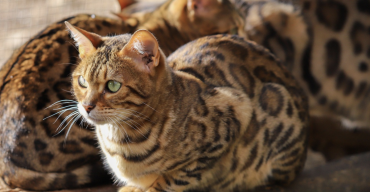
The Bengal is instantly recognisable thanks to its short, silky and highly contrasted coat, often marked with distinctive rosettes or marbled patterns reminiscent of wild felines. Its long, muscular and athletic body further enhances its elegant yet powerful appearance.
Its short coat is relatively easy to maintain. An occasional brushing is usually enough to remove loose hair and keep the coat looking glossy. More than grooming, the Bengal’s greatest daily need is activity and an enriched environment that keeps both body and mind engaged.
The Bengal is generally a healthy breed, although certain conditions may occur in some bloodlines. Hypertrophic cardiomyopathy (HCM) is one of the most commonly monitored concerns, along with some digestive or joint-related issues.
Regular veterinary care, a high-quality diet and a lifestyle suited to the breed’s activity level are essential for long-term wellbeing. Before adopting a Bengal, it is advisable to choose a responsible breeder who is transparent about health testing and breeding lines.