| Characteristic | Details |
| Size | Medium to large |
| Build | Elegant and well-balanced |
| Coat length | Medium-long |
| Shedding level | Moderate |
| Energy level | Moderate |
| Life expectancy | 12 to 16 years |
| Best suited for | Families, children, dogs and other cats |
Despite its evocative name, the Birman is a breed that was developed in France during the early 20th century. Its history is surrounded by legends, including the famous tale of a white temple cat in Burma whose coat was transformed by a sapphire-eyed goddess. While this mythical story still contributes to the breed’s mystique, the Birman’s true origins are believed to stem from crosses between Siamese- and Persian-type cats.
Following World War II, the breed nearly disappeared before being rebuilt through the dedication of passionate breeders. Today, the Birman is one of the most beloved cat breeds in France, admired for its gentle temperament and refined appearance.
The Birman is an especially affectionate cat that forms strong bonds with its family. Many Birmans enjoy following their humans from room to room and happily taking part in everyday household life.
Highly sociable, it generally adapts well to family living and often coexists peacefully with other pets. Playful without being hyperactive, it thrives in a calm and harmonious environment and values close relationships with its humans. Its soft voice and well-balanced temperament are key reasons why it is considered such an easy companion to live with.
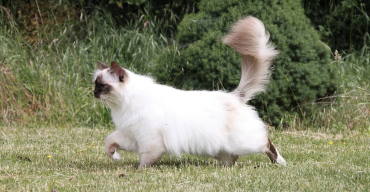
The Birman immediately stands out thanks to its elegant appearance and striking deep-blue eyes. Its silky medium-long coat features the distinctive colourpoint pattern, complemented by the breed’s famous white “gloves” on the paws.
Unlike some long-haired breeds, the Birman has relatively little undercoat, which helps reduce tangles and matting. Regular brushing is usually enough to keep the coat soft, clean and well maintained. A fuller ruff around the neck further enhances its graceful and majestic appearance.
The Birman is generally considered a robust breed, although certain inherited conditions can occur in some bloodlines. The breed may be predisposed to health concerns such as hypertrophic cardiomyopathy (HCM) and certain kidney-related disorders. As with other pedigree cats, regular veterinary care is important for monitoring heart, kidney and joint health.
A balanced diet, a calm environment and regular coat maintenance all contribute to the Birman’s overall wellbeing. It is also advisable to choose responsible breeders who carry out appropriate health screening for the breed.