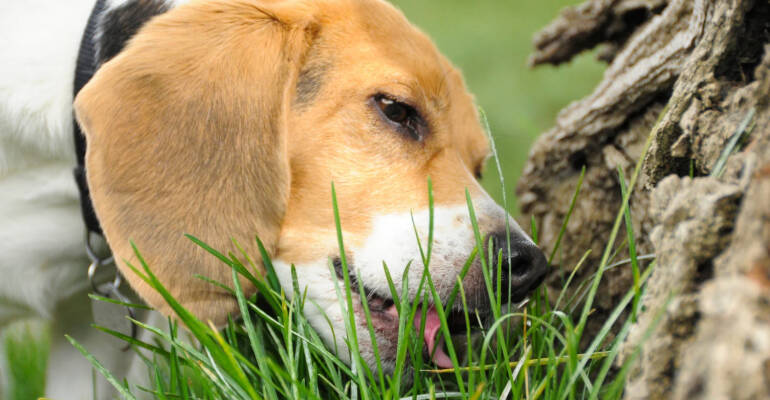
You have probably already noticed your dog nibbling on a few blades of grass during a walk. Although this behaviour may seem surprising, it is very common among our four-legged companions. Some dogs eat grass occasionally, while others seem particularly attracted to vegetation. But why do they do it? Are they trying to make themselves vomit when they have an upset stomach? Is it dangerous for their health? And, most importantly, when should you consult a veterinarian?
Contrary to a widely held belief, a dog that eats grass does not necessarily have an upset stomach.
Several explanations may account for this behaviour. Some dogs simply enjoy the taste or texture of grass, particularly when it is young and tender. Others may do it out of curiosity, habit or a desire to explore their surroundings. Occasional plant consumption is also part of the normal behavioural repertoire of many dogs.
It is sometimes suggested that dogs eat grass to increase their fibre intake. However, this hypothesis has not been clearly established, and this behaviour does not necessarily mean that their diet is unbalanced.
This is probably the most widespread belief: when a dog eats grass, it is supposedly trying to induce vomiting to relieve its stomach. In reality, available studies do not confirm that dogs typically eat grass for the purpose of vomiting.
One study involving more than 1,500 dogs found that plant consumption was common, but only a minority of dogs regularly vomited after eating grass. Signs of illness before ingestion were also uncommon.
This does not mean that there is no connection between digestive problems and grass consumption. Some dogs may indeed seek out grass when they experience nausea or digestive discomfort. However, eating grass alone is not a reliable symptom of digestive illness.
In most cases, there is no need to routinely prevent a healthy dog from nibbling on a few blades of grass.
This behaviour is generally harmless when it occurs occasionally and the animal shows no other symptoms. Nevertheless, there are several important precautions to keep in mind. Grass may have been treated with herbicides, pesticides or other potentially toxic substances. Some green spaces may also be contaminated with animal faeces or parasites.
It is therefore advisable to prevent your dog from eating grass in areas that have recently been treated with chemicals, near potentially toxic substances or in places that are heavily contaminated.
You should also be cautious if your dog eats unfamiliar plants, as some ornamental plants are toxic to animals. Finally, if your dog consumes large quantities of grass, particularly in a rushed or frantic manner, it is best to calmly interrupt the behaviour and monitor their general condition.
Some green spaces may be contaminated with parasites. Find out how to protect your dog from parasites through appropriate preventive care.
A dog that occasionally eats grass, maintains a healthy appetite and remains active generally does not need to see a veterinarian for this behaviour alone.
However, a sudden or significant increase in grass consumption deserves particular attention, especially when accompanied by other symptoms.
Several signs should prompt you to consult a veterinarian:
These symptoms may be associated with various digestive conditions, such as gastritis, gastroenteritis, digestive irritation or, more rarely, a more serious illness.
Important: If your dog has a swollen abdomen, repeatedly tries to vomit without producing anything, experiences severe pain or shows marked lethargy, seek emergency veterinary care. These signs may indicate gastric dilatation-volvulus (GDV), a potentially life-threatening condition.
A veterinary consultation may sometimes require additional tests. To better prepare for these expenses, read our article on veterinary costs.
When unusual grass consumption is accompanied by symptoms, the veterinarian will begin with a clinical examination and an assessment of the animal's habits. Depending on the signs observed, additional tests may be recommended, including blood tests, faecal examinations, X-rays or an abdominal ultrasound. These investigations can help identify digestive disease, a foreign body, a parasitic infestation or another condition that may explain the symptoms.
Treatment will then depend on the underlying cause. It may involve simple dietary adjustments, medication or, in some situations, more intensive treatment.
The most important thing is not whether your dog occasionally eats grass, but understanding the circumstances in which they do so and how they behave afterwards. A dog that nibbles on a few blades of grass during a walk and then carries on with its usual activities generally gives little cause for concern.
However, a sudden change in behaviour, repeated vomiting or a deterioration in their general condition should never be dismissed. A balanced diet, appropriate parasite prevention and regular veterinary check-ups all contribute to maintaining good digestive health.
In summary: eating grass is often a normal behaviour in dogs. It is primarily the frequency, intensity and any accompanying symptoms that should guide your decision about whether to consult a veterinarian.
Because digestive problems may sometimes require unexpected tests or treatment, planning ahead for veterinary expenses can also help you care for your companion with greater peace of mind.