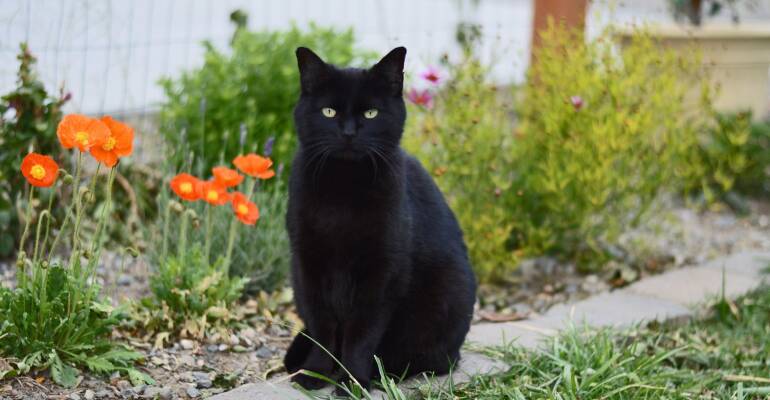
Mysterious, elegant and often surrounded by legends, black cats have fascinated people for centuries. With their dark coats and striking eyes, they have become an iconic symbol of Halloween. But behind their image as witches' companions is simply a cat with its own personality, habits and needs.
Why are black cats associated with bad luck? Which breeds can have an entirely black coat? And how can you keep them healthy? With Halloween approaching, let's explore everything you need to know about these fascinating feline companions.
A black cat can be affectionate, independent, playful, shy or particularly curious, just like any other cat. Contrary to popular belief, coat colour does not determine personality. A cat's temperament is influenced by factors such as genetics, socialisation, past experiences and environment.
Some black cats love curling up beside their humans for hours, while others prefer to observe their surroundings from a distance and choose when they want affection. There is no single personality type shared by all black cats.
To understand your companion better, pay attention to their habits and body language. A cat that rubs against your legs, purrs beside you or slowly blinks at you may be showing trust and contentment.
To support their well-being, provide regular playtime, hiding spots and elevated spaces where they can rest peacefully. Respecting their individual preferences is essential for building a trusting relationship.
Several cat breeds can have an entirely black coat, but not every black cat belongs to a specific breed. Many domestic cats, whether short-haired or long-haired, can also have black fur.
The Bombay is often the first breed that comes to mind when people think of black cats. Developed to resemble a miniature panther, it has a short, dense, glossy black coat, usually paired with copper or golden eyes.
Often described as sociable and playful, the Bombay enjoys interacting with its humans. Its distinctive appearance makes it one of the most recognisable black cat breeds.
The British Shorthair comes in several colours, including black. It is known for its sturdy build, round face and dense coat. Its teddy bear-like appearance and often calm temperament make it a popular choice among cat lovers.
Large and recognisable by its long fur, the Maine Coon can also have a solid black coat. This breed is appreciated for its majestic appearance and generally sociable nature. Regular grooming helps prevent tangles and keep its coat in good condition.
The Persian can also have a black coat. It is known for its long, abundant fur, which requires frequent brushing. Persians with particularly flat faces may also experience health issues linked to their facial structure, making regular veterinary care especially important.
Whatever the breed, choosing a cat should primarily depend on its temperament, needs and compatibility with your lifestyle.
Black cats have fascinated people for centuries, inspiring myths, traditions and beliefs across different cultures. While they are often associated with Halloween today, their symbolism is far more varied than many people realise. Throughout history, cats have been admired, celebrated and sometimes misunderstood, with their dark coats adding to their mysterious reputation.
According to popular legend, Cleopatra was particularly fond of cats, and some stories suggest that she owned a black cat. Although this specific detail has not been reliably documented, cats held an important place in ancient Egyptian culture. They were respected for their ability to protect homes from pests and were associated with Bastet, the goddess of protection, fertility and domestic life. In this context, cats were seen as valuable and sometimes sacred animals rather than symbols of bad luck.
In contrast, during parts of European history, particularly in the Middle Ages and the early modern period, black cats became associated with witchcraft and supernatural forces. Their nocturnal habits, silent movements and ability to disappear into the darkness helped fuel these beliefs. Over time, stories and folklore contributed to the superstition that encountering a black cat could bring bad luck. These ideas continue to influence Halloween imagery today, alongside witches, pumpkins and ghosts.
However, black cats have not always been viewed negatively. In some Chinese traditions and popular beliefs, black cats are associated with spiritual protection and the ability to ward off negative influences. Depending on the context, they may also be linked to good fortune and prosperity. As with many cultural traditions, beliefs vary between regions and communities, showing that the symbolism of black cats is far from universal.
These contrasting stories reveal how the same animal can inspire very different interpretations across cultures and generations. Today, black cats remain an iconic part of Halloween, but their coat colour has no connection to luck, personality or supernatural abilities. Beneath the myths and legends, they are simply cats with their own individual temperaments, needs and personalities — and, like any other cat, they deserve love, care and a safe home.
Coat colour does not determine a cat's medical needs. Like all cats, black cats need a balanced diet, fresh water, a suitable environment and regular veterinary care.
Kittens, adult cats and senior cats have different nutritional requirements. Choose a complete diet suited to your cat's age, weight and activity level. Portion sizes should also be adjusted to help maintain a healthy weight.
Fresh water should always be available. Some cats enjoy drinking from water fountains, which may encourage them to drink more.
Vaccinations, parasite prevention, dental care and regular veterinary check-ups all contribute to your cat's health. Routine appointments also help monitor their general condition and identify potential problems earlier.
Watch for changes in appetite, unusual thirst, repeated vomiting or changes in behaviour. If you notice any unusual symptoms, seek advice from your vet.
Find out more: Read our article on dog and cat vaccinations: an essential step in protecting their health and learn more about internal and external parasites in pets.
Adopting a black cat means welcoming a companion whose needs you will care for throughout their life. Whether you choose a kitten or an adult cat, a little preparation can help make the transition easier.
Before your cat arrives, prepare an accessible litter tray, food and water bowls, a comfortable bed, hiding places and toys. Introduce them to their new surroundings gradually, allowing them time to settle in and feel safe.
If you already have another pet, introduce them gradually to reduce stress and encourage a peaceful relationship.
A black coat can be particularly striking, but appearance should never be the only factor when choosing a cat. Take the time to learn about their personality, background, health and everyday needs.
Animal shelters and rescue organisations can help you find a companion whose temperament and lifestyle are a good match for your household.
Adoption also involves planning for food, supplies and veterinary expenses. Setting a realistic budget helps you meet your cat's needs throughout their life.
Read also: Veterinary Costs: Understanding Expenses to Better Plan Ahead.
Whether they are an elegant Bombay, a majestic Maine Coon or a domestic cat adopted from a shelter, black cats deserve to be appreciated for their individual personalities rather than the superstitions surrounding them.
Halloween is a wonderful opportunity to celebrate their mysterious appearance, but caring for them is a year-round commitment. A suitable diet, preventive healthcare and a safe environment all help them thrive. Whatever the colour of their coat, every cat deserves affection, respect and a family that cares for them.